Literary dystopian fiction · Adult / crossover · Forthcoming
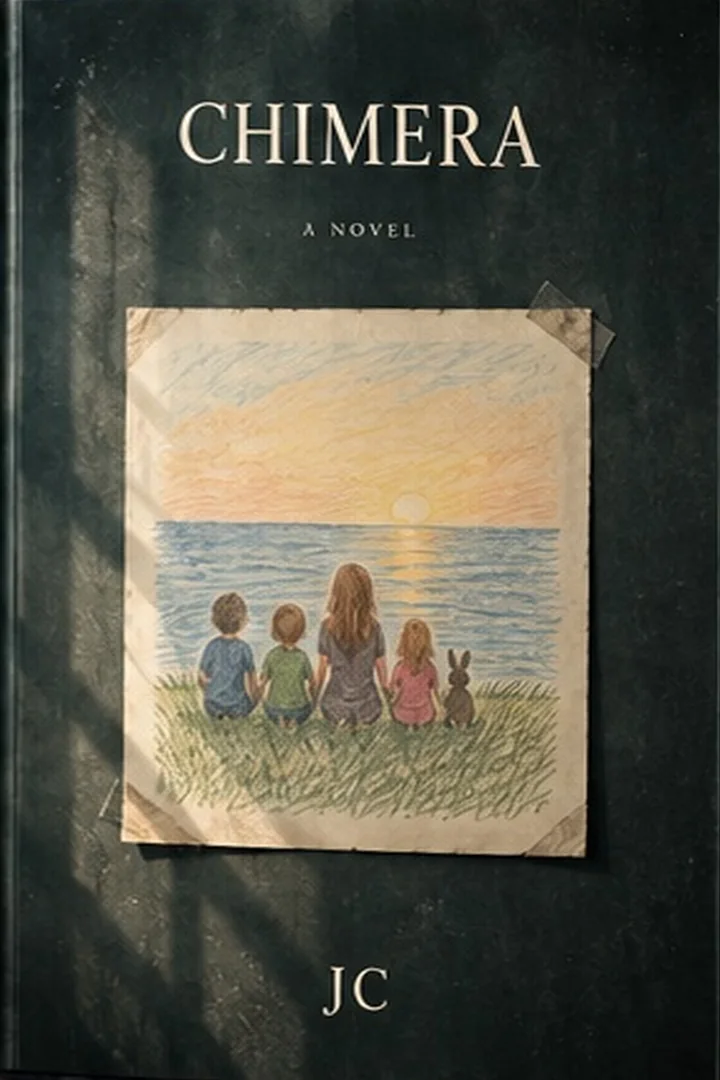
Chimera
Four children the state calls dangerous. One chance to prove they are only children.
About the book
Ten years after an attack on a nuclear site, Britain screens every young child for exceptional abilities, and the children who score highest disappear. In a facility on an island off the coast, the four children of Assessment Group Six have learned that being useful is the only thing keeping them alive.
Danny can pull power out of the lights. Sam can move things without touching them and mend what is broken. Leah sees a little way ahead. Ruby, the youngest, catches pieces of what people are thinking. On paper they are Band 1, kept alive by a retention exemption that can be cancelled with a signature. When the children in the next group vanish overnight, they understand how little time they have left. What follows is an escape across the water and through an England that has learned to look away, where ordinary people must decide whether to report four frightened children or feed them. Restrained, tender and unflinching, Chimera is a story about friendship as a way of surviving, about what it costs to help, and about choices that can never be taken back.
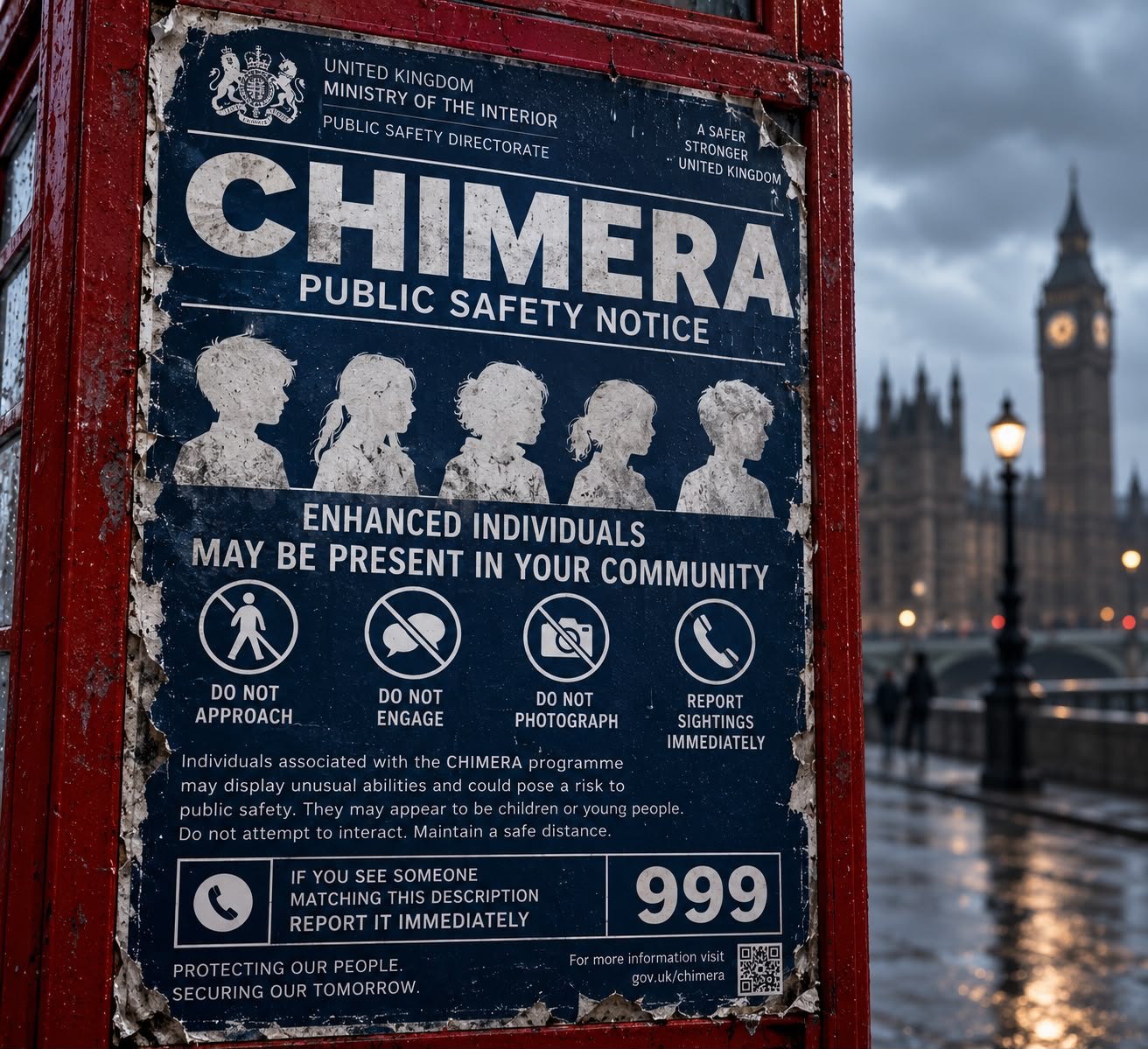
The world of Chimera
An island off the coast
A facility on an island off the coast of Britain, and across the water an England that has learned to look away.
Key themes
- Cruelty dressed as public safety
- Forms, risk bands and polite language that make the unthinkable feel routine.
- Chosen family
- Four children who keep each other alive when the adults who should have protected them do not.
- Ordinary complicity, ordinary courage
- The neighbour who looks away and the stranger who opens a door.
- Power and consequence
- What it means to have a gift you never asked for, and the moral weight of using it.